
Exhibitions
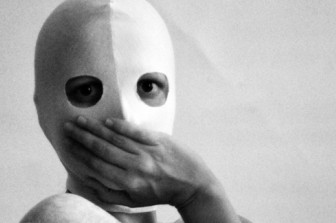
Women in Protest: Reveal and Conceal
The first part of the exhibition focuses on the notion of anonymity as a crucial component in contemporary female activism. This motif opposes the idea of intimate and personal familiarity with the female image.
Judith Butler in her book Precarious Life (2004) analyzes images of victims in the media. The victim’s narrative is always told in the first person. We identify with the victim by getting to know his or her family, education, and lifestyle.
Saturday, 09.06.18
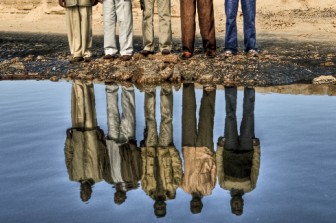
We Refugees*
Seeking refuge, immigration, crossing the Mediterranean via clandestine routes – these have become central issues for many artists, critics, and curators. Small boats carrying immigrants have emerged, in the words of art historian Jennifer González, as "an iconic sign and key metaphor for African migration."
Saturday, 09.06.18
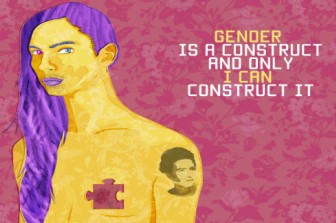
Queer Performance: From Gilbert & George to the Present Day
The liberal political stance that seeks to define the limits of the LGBTQIA space is based on two complementary assumptions. First is the assumption of otherness, which presumes an inherent difference between the LGBTQIA community and heterosexuals – one that transcends any other form of kinship that may exist between the two groups.
Saturday, 09.06.18
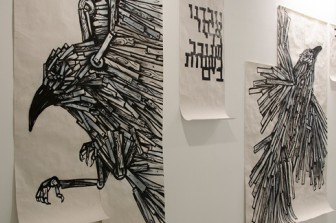
Dede and Nitzan Mintz: Out of Place
Dede's activity as a street artist spans over a decade, and his works are exhibited in galleries and museums. He draws inspiration from the pulse of the cityscape – architecture, rhythms, voices, and passers-by. He is motivated by a desire to leave his own mark on the city, which has become an integral part of his work.
Saturday, 09.06.18

Saturday, 09.06.18
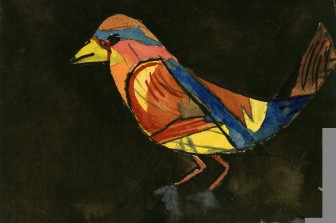
Once upon a time
Jewish children drawings in Germany of world war two
At the heart of the present exhibition are fifty paintings by Jewish children in Germany on the eve of the Second World War. The pictures were selected from a unique collection of over 1,800 items, part of the estate of artist and teacher Julo Levin (born 1901, perished in Auschwitz, 1943). His close friends worked hard to save Levin’s works and preserve his legacy, and donated the collection to the Stadtmuseum of Düsseldorf.
Sunday, 20.05.18
Opening hours: Sunday to Wednesday, 10:00 - 14:00, Friday, 13: 00-10: 00, Saturday 10: 00-14: 00.
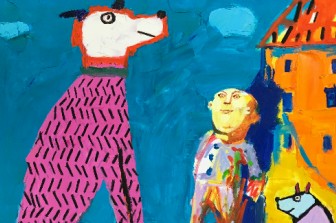
"man and beast and other animals"
In prehistoric times, human beings and animals roamed the Earth as equals. Like the animals, human beings were subject to the forces of nature, adapting to far-reaching climate change, wandering in search of water and food, hunting and being hunted.
Saturday, 17.08.19

Shop It!
The desire for objects, the passion for "shopping," is translated today into a popular pastime. Indeed, a large part of happy humanity solemnly attends the rituals of consumption, equipped with credit cards. Its goal is to find meaning and discover a new identity: "I consume, therefore I am"; I am inseparable from a large group of happy beings – consumers of merchandise and opportunities.
Sunday, 17.02.19
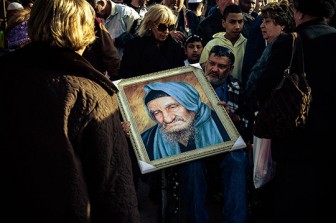
Sacred Goods
This exhibition focuses on the responses of contemporary artists to issues of religion and faith in the contemporary global reality, which is dominated by the consumer culture.
Sunday, 17.02.19
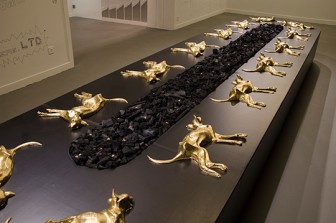
Eyal Assulin: Majesty
Eyal Assulin's visual language explores the culture of prosperity with reference to global socio-economic aspects. His works engage with Eastern culture, featuring a matrix of historical, gender, and artistic status symbols. These are presented in a forthright manner that parodies the bulimic impulse of contemporary consumerism.
Sunday, 17.02.19
Please contact us and we will contact you as soon as possible